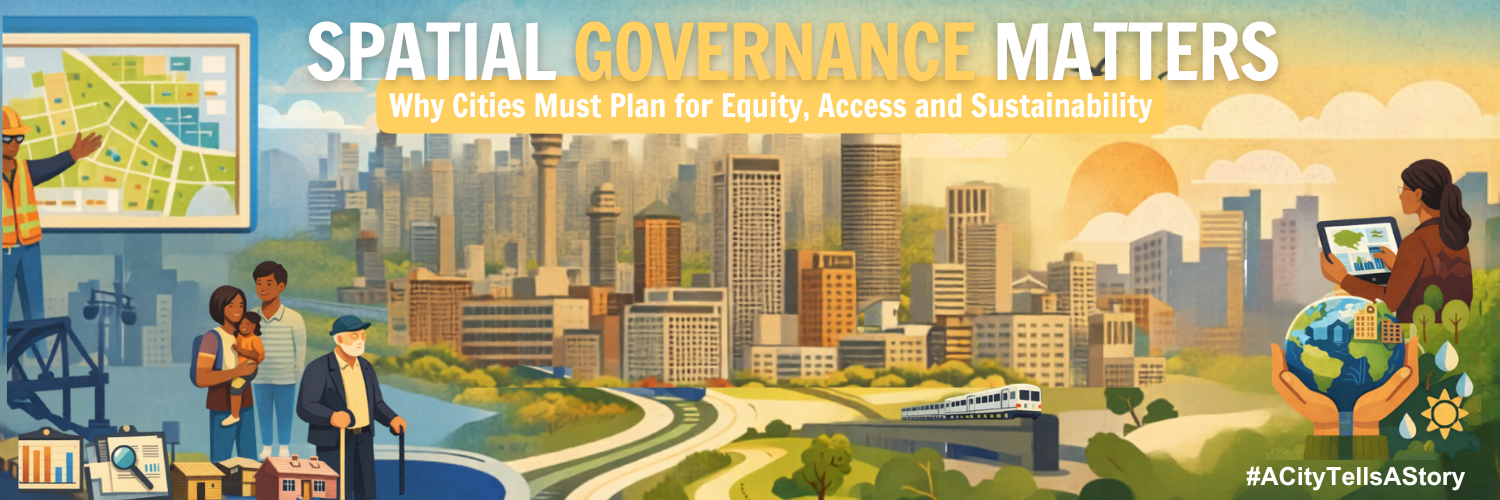
How a city is planned shapes who gets to participate in it. Where people live, how far they travel to work, and whether they can access basic services or opportunities are all outcomes of spatial decisions. In South Africa, the legacy of fragmented, unequal urban form is still visible in long commutes, uneven service delivery, and limited access to economic hubs for many residents. This is why spatial governance is not just a technical function; it sits at the heart of building fair, inclusive and resilient cities.
Good spatial governance brings together planning, infrastructure investment and policy in a way that prioritises equity. It asks practical questions: Are we connecting people to jobs? Are we investing in areas that have been historically underserved? Are we using land efficiently while protecting the environment? When these questions guide decision-making, cities can begin to shift away from patterns that reinforce inequality.
Access is a key part of this. Cities that are well connected by public transport, feature mixed-use development, and pursue integrated planning make it easier for residents to reach opportunities and services. This improves quality of life and supports local economies. At the same time, sustainability must be built into spatial decisions. As cities grow, planning needs to respond to climate risks, resource constraints and the need for more compact, efficient urban forms.
The South African Cities Network (SACN) plays an important role in supporting this shift. Through its research, knowledge-sharing platforms and programmes, SACN helps cities understand spatial trends, test new approaches and learn from one another. Initiatives such as the State of Cities Reports and the Smart Cities programme provide evidence and practical insights that inform better spatial planning and governance.
Ultimately, spatial governance is about making deliberate choices that shape more just and sustainable cities. For South Africa’s metros, this means aligning planning with long-term development goals, strengthening coordination across sectors, and keeping the needs of residents, especially the most vulnerable, at the centre of decision-making.
#ACityTellsAStory
To partner with us, click here.